
Fascial Sensory Activation™ Method
Powered by Ionic · Magnetic · Vibrational Stimulation — a science-based system designed to activate the sensory network embedded in fascia.
What is Fascia Buzz®?
Fascia Buzz® is based on the understanding that fascia is not only structural tissue, but a sensory and fluid matrix that communicates continuously with the nervous system. Our multi-stimulation system integrates three forms of stimulation to activate this network — improving movement, coordination, and body awareness.
Traditional methods focus on
✕ Release
✕ Stretching
✕ Passive tissue work
Fascia Buzz® focuses on
✓ Sensory activation
✓ Neuromuscular coordination
✓ Multi-stimulation input
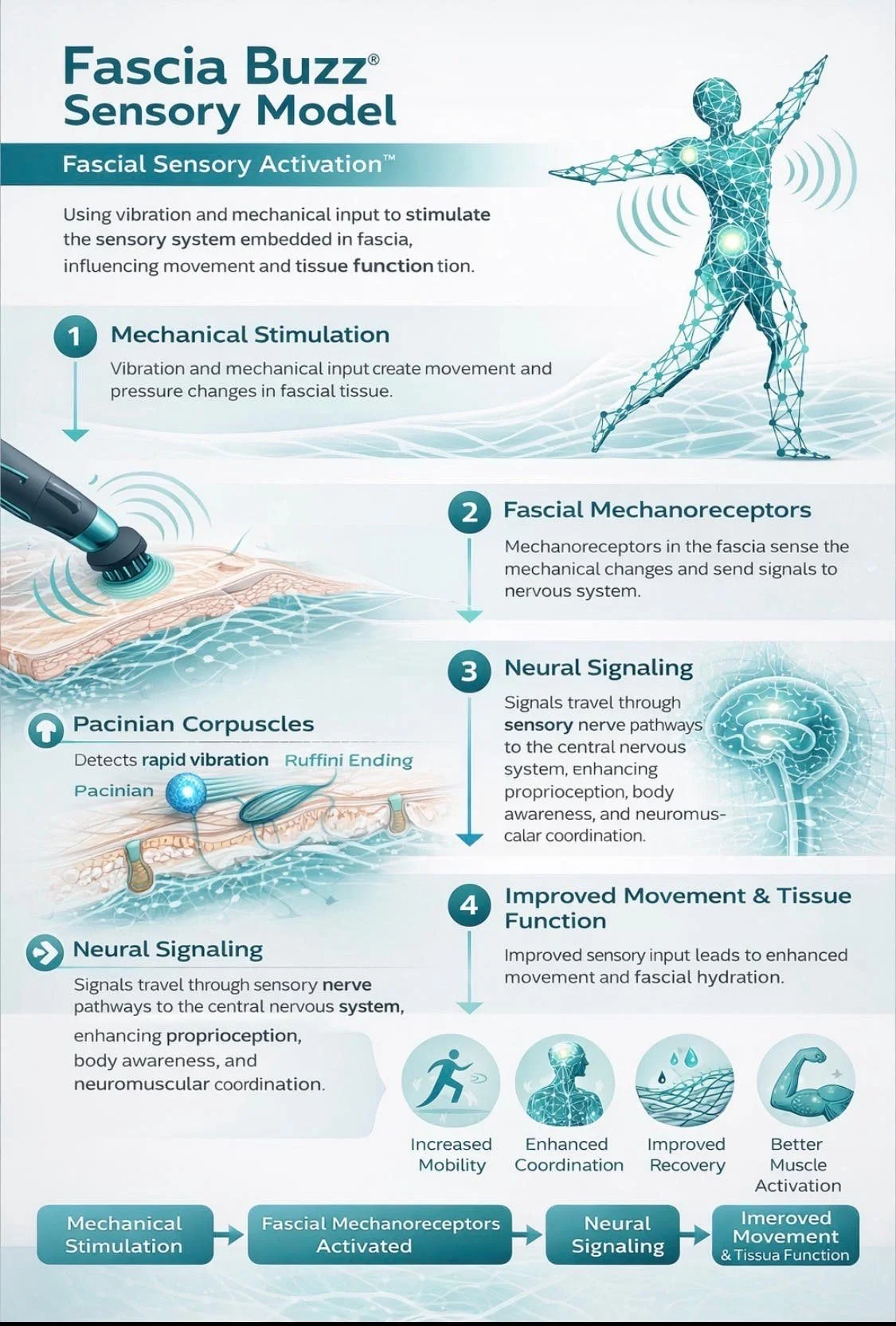
Three Forms of Stimulation
Fascia Buzz® integrates three stimulation types that work together to activate the fascial sensory system.
Mechanical (Vibration)
Provides dynamic mechanical input to fascial tissue.
Activates mechanoreceptors
Enhances sensory signaling
Supports proprioception
Magnetic Influence
Interacts with the body's natural electromagnetic environment.
Supports tissue responsiveness
Influences fluid dynamics
Contributes to sensory stimulation
Ionic Interaction
Fascia functions within a fluid environment rich in ions.
Supports cellular communication
Enhances tissue hydration
Improves fluid balance
How It Works — The Process
Mechanical + Magnetic + Ionic Stimulation → Fascial Mechanoreceptors Activated → Sensory Signals to Nervous System → Improved Movement & Body Awareness
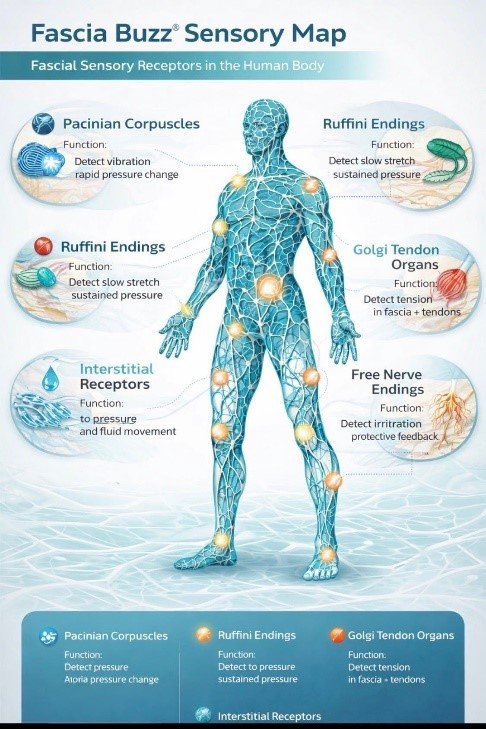
Key Receptors Involved
The Fascia Buzz® method targets specialized sensory receptors distributed throughout the fascial system. These mechanoreceptors detect vibration, pressure, stretch, and tension and communicate with the nervous system to regulate movement and proprioception.
Pacinian Corpuscles
Detect vibration and rapid pressure changes
Ruffini Endings
Respond to sustained pressure and stretch
Golgi Receptors
Monitor tension across fascial tissue
Interstitial Receptors
Respond to pressure and fluid movement
The Fascia Buzz® Framework
A three-tier approach that takes the body from sensory input to functional, coordinated movement.
1) Sensory Activation
Activating mechanoreceptors in fascia through vibration, oscillation, mechanical stimulation, and tactile input. Goal: improve sensory awareness of the body.
2) Fascial Hydration
Improving interstitial fluid movement, lymphatic support, and fascial glide using rhythmic vibration, dynamic loading, and fascial pumping movements. Goal: restore elastic, hydrated fascia.
3) Movement Integration
Integrating sensory signals into functional movement patterns through vibration with movement, resistance stretching, and sensory movement drills. Goal: improve movement quality and control.